RUNHE Hong Kong
Architectures

Two ways to get the heat out.

Immerse the electronics, or run fluid through a cold plate on top of them. Both remove the air gap; both are supported end to end with our own coolant.

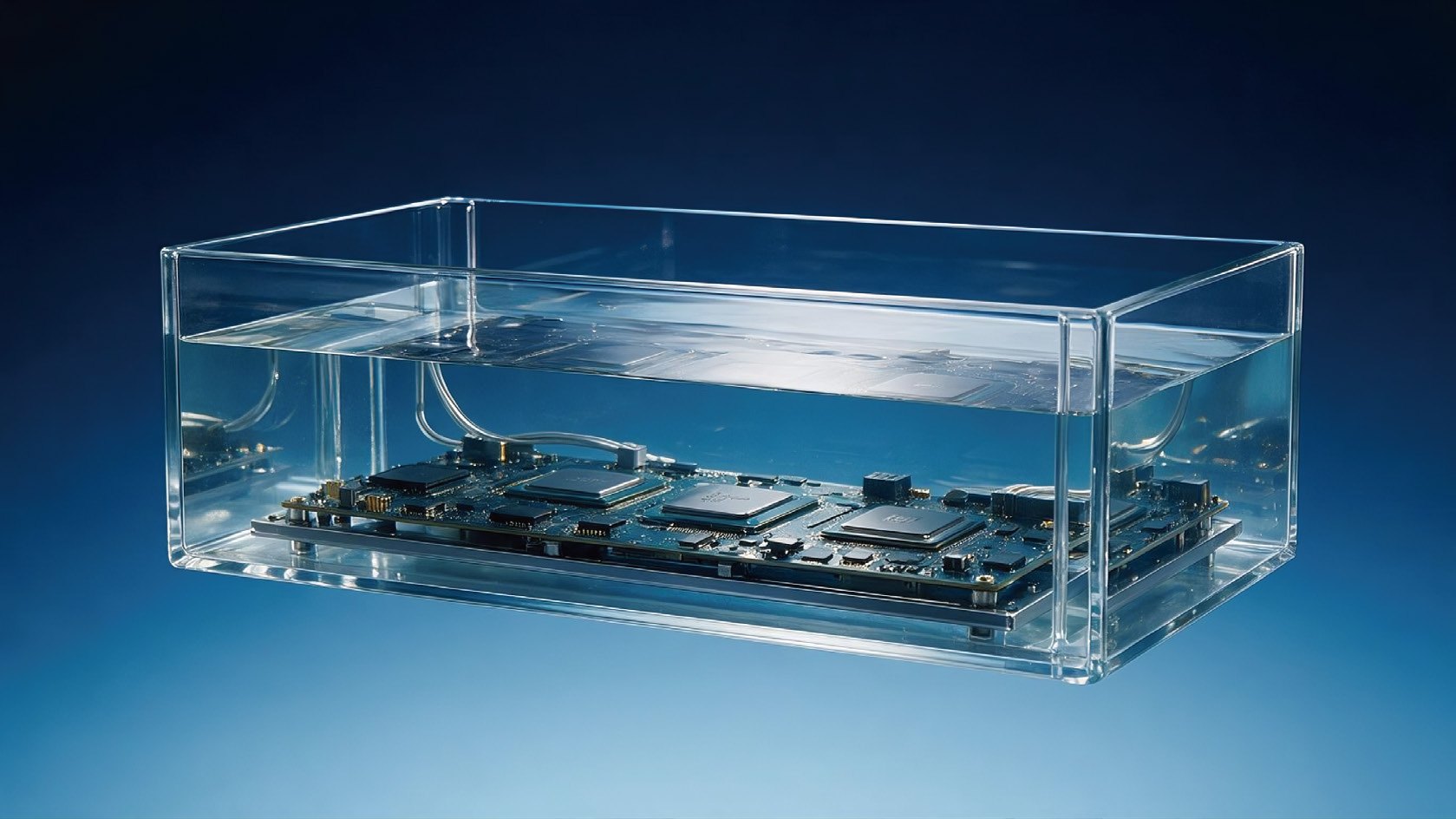
Servers submerged in dielectric coolant
01 · Immersion

The components sit in the fluid.

CPUs, boards, memory and drives are submerged in a dielectric, chemically inert coolant that circulates and carries heat away. Thermal resistance from component to environment drops by an order of magnitude against air.

IMMERSION TANK dielectric coolant warm return HEAT EXCHANGER plate · dry cooler cooled supply
Tank & dielectric Circulation loop Server nodes
Single-phase

Stable, quiet, maintenance-free.

Single-phase systems use Runhe's silicone-based coolant and hold component temperature constant without additional maintenance. PUE can reach below 1.06, and because the fluid touches every surface, the internal temperature field stays highly uniform — which lowers thermal runaway risk.

More stable temperatureLower PUE Even temperature fieldMaintenance-free
Two-phase

Boiling point as the thermal ceiling.

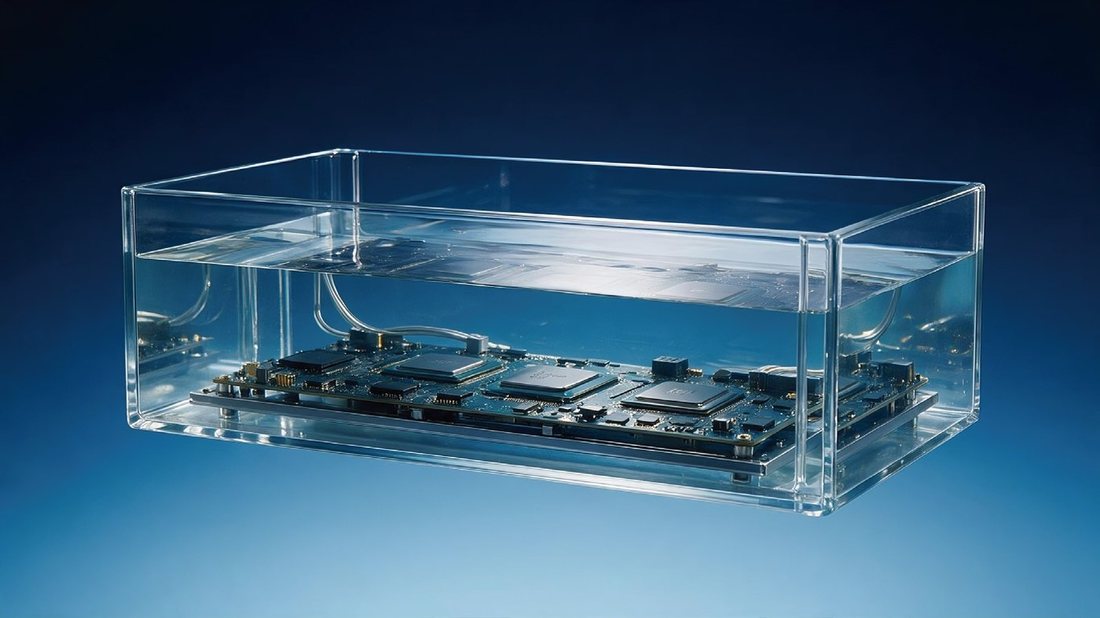
Two-phase systems use Runhe's proprietary fluorinated fluid and exploit latent heat of vaporisation. The boiling fluid absorbs large amounts of heat, giving a heat transfer coefficient far above single-phase convection — the right tool for ultra-high power density.

Highest heat fluxPUE 1.02–1.05 Dielectric & non-flammableSilent

Where immersion fits

AI computing centers, HPC, edge computing and enterprise data centers. Particularly useful where floor space is limited, where a traditional machine room cannot be built, where delivery must be fast, or where environmental and safety rules are strict.

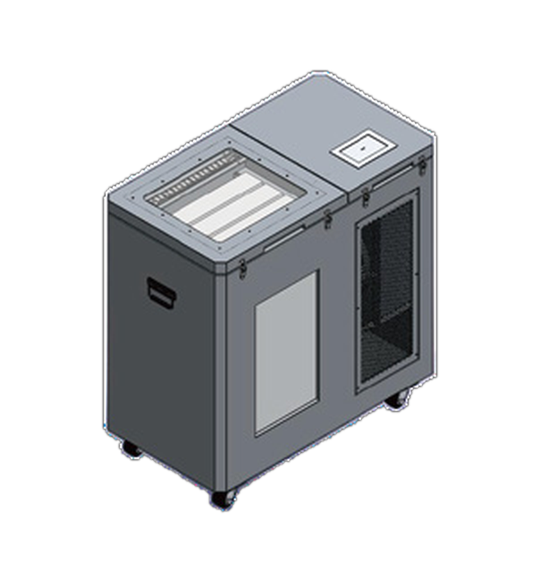
Immersion tank with servers
02 · Cold plate

Fluid goes to the chip, not the room.

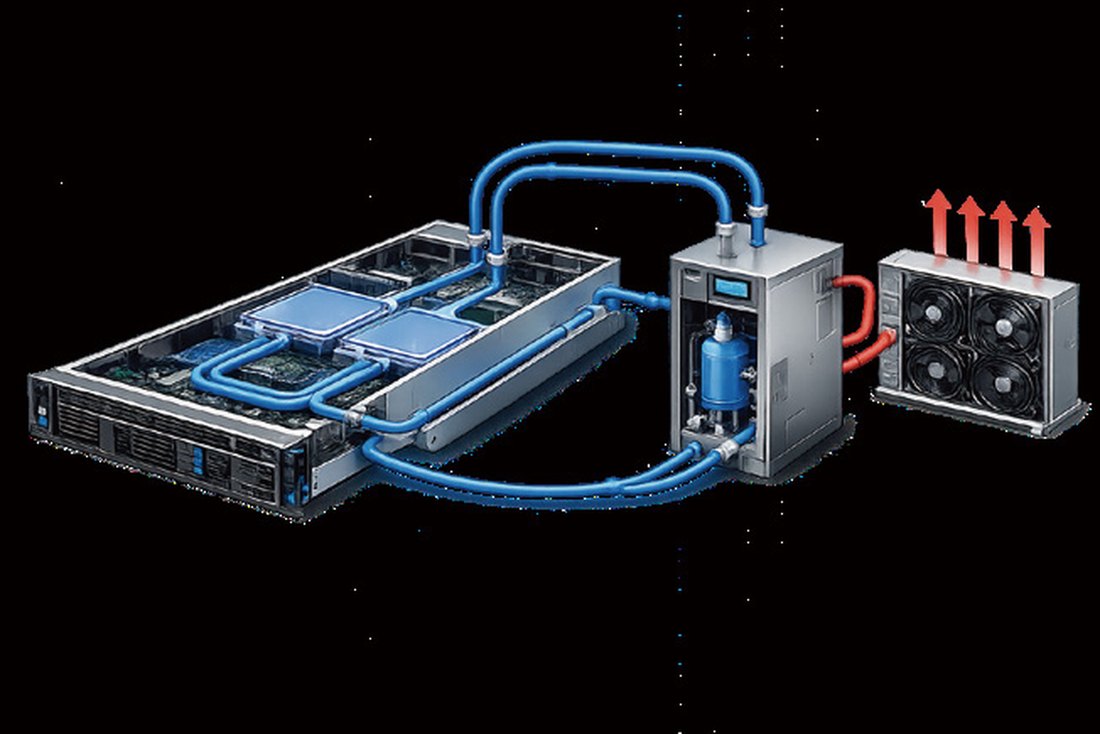
Cold plates sit on the CPUs and GPUs inside the server. Heat conducts into the coolant, and a CDU rejects it to a facility loop. The server architecture barely changes.

SERVER GPU CPU COLD PLATES CDU dual pumps · plate HX FACILITY water loop HEAT REJECTION cooling tower
Cold plates Secondary loop Facility loop
01

Lower upgrade cost

Minimal modification to existing server architectures and rack layouts.

02

Moderate initial investment

A practical short-to-medium-term route for legacy IDC retrofits.

03

Energy efficiency

Better PUE and a more comfortable operating environment for the hall.

04

High temperature uniformity

Superior cooling performance with tight chip-to-chip variance.

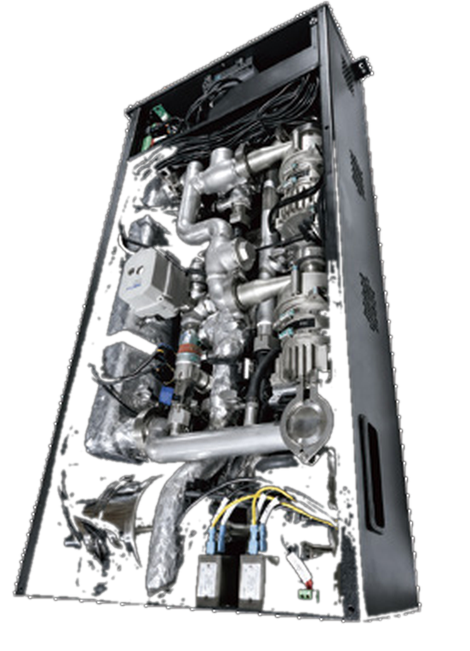
Cold plate loop hardware

Where cold plate fits

Medium-to-large data centers, AI computing centers, enterprise server rooms and IDC retrofits. It is the pragmatic choice when the estate already exists and downtime has to stay near zero.

  • 16 kW air-to-liquid for a single rack
  • 150 kW in-rack liquid-to-liquid for a dense rack
  • 500 kW in-row for an AI hall
Technology

Three disciplines, one cabinet.

01

Independent coolant R&D

Runhe is one of the few companies able to develop and mass-produce a full series of data center coolants: single-phase immersion, cold plate, and two-phase fluorinated fluids.

02

Precision flow-field simulation

A dedicated CFD team simulates the whole machine and shapes inlet and outlet geometry for even flow across every node and a uniform tank temperature field.

03

Multi-dimensional control

Power, coolant temperature, ambient humidity and flow rate feed an adaptive thermal model that damps oscillation and removes local hot spots in real time.

What the control loop actually does

  • Collects cabinet power, coolant temperature, indoor and outdoor temperature and humidity, and liquid flow rate
  • Runs an improved injection-learning thermal model to pick an energy-efficiency strategy
  • Adapts to the server's own historical operating data to counter coolant thermal inertia
  • Uses three control modes to eliminate local hot spots from live sensor analysis

On H800-class servers the current platform supports GPU power densities above 88 W/cm² at a PUE under 1.06.

Server hardware

Immersion, cold plate, or a mix of both?

Most estates end up hybrid: cold plate on the dense racks, immersion where the density or the room makes it worthwhile. We can model both against your load.